

Ever wonder if movie ratings are just old labels or really clues about what you'll see? This guide explains what G, PG, PG-13, R, and NC-17 mean in plain terms for both viewers and families. We break down age recommendations, highlight key content notes, and offer parental tips so you can quickly decide if a film is right for you. Read on and discover how these labels can help you choose your next movie night pick.
Film Ratings System Explained: Clear and Crisp
Film ratings give a simple guide to a movie’s content so you know what to expect. They help you decide if a film is right for you or your family by flagging things like violence, sex, drugs, and strong language. Groups like the MPAA/MPA use three things for each rating: an age guideline, notes about the content, and advice for parents. For example, a movie rated PG-13 might have some moderate violence or a few strong words, which means parents should check it out first if children are watching.
The main MPAA/MPA ratings are G, PG, PG-13, R, and NC-17. A G rating means the film is safe for everyone because it has no content likely to offend. PG (Parental Guidance Suggested) tells you there might be some material that could upset younger kids, like mild violence or a few strong words. PG-13 (Parents Strongly Cautioned) warns that some scenes may be too intense for children under 13. An R rating means anyone under 17 should see the movie only with an adult, due to strong language or heavy themes. NC-17 (Adults Only) means the film shows explicit content meant only for mature audiences.
Imagine a movie that uses a few intense scenes but still keeps most things light. A PG or PG-13 rating would help you know what to expect and decide if it’s right for you or your family.
Historical Evolution of the Film Ratings System

Before modern ratings, filmmakers had to navigate nearly inflexible censorship rules that left little room for creative expression. In 1912, the British Board of Film Classification was created to set one standard for movie content. This change helped audiences know what to expect when they saw a film.
In the United States, a similar effort started in 1922 when the Motion Picture Producers and Distributors of America was set up. By 1930, they introduced the Hays Code. This strict set of rules meant movies could not show explicit romance or touch on hot topics, keeping films on a very moral path.
Then in 1945, the group renamed itself the MPAA, hinting at its growing power in the film industry. As attitudes in society began to shift, the long-held Hays Code was dropped in 1968, making way for a system where ratings were advisory rather than mandatory. Jack Valenti and his team led this change, giving filmmakers more freedom while still warning viewers about content that might be sensitive.
More recently, in 2019, the MPAA shortened its name to the MPA to show that its reach was no longer just local but global. This history shows how film ratings have evolved from rigid rules to a more flexible system that respects both creative expression and audience awareness.
Understanding MPAA Rating Categories in Film Ratings Systems
Movie ratings help you know what to expect before you watch a film. They quickly show how much content is in a movie and which age group it suits best. Here’s a simple breakdown with clear examples:
-
G (General Audiences)
These films are good for everyone. There is no content likely to upset or offend.
Example: A calming nature documentary with soft narration and stunning views fits a G rating perfectly. -
PG (Parental Guidance Suggested)
These movies might have a bit of mild action or a few rough words. Parents should decide if the film is right for their children.
Example: An animated adventure with light humor and a few suspenseful moments usually earns a PG rating. -
PG-13 (Parents Strongly Cautioned)
Some scenes may have moderate action, brief hints of sexual content, or drug mentions. They are not meant for children under 13, although older teens can watch with guidance.
Example: A fast-paced superhero film with energetic action and brief intense scenes often receives a PG-13 rating. -
R (Restricted)
These films include stronger language, more intense action, or adult themes. Viewers under 17 should only watch these movies with a parent or guardian.
Example: A crime thriller featuring strong language and tense scenes generally has an R rating. -
NC-17 (Adults Only)
Meant exclusively for mature audiences, these films might include very graphic sexual content or extreme violence. They are off-limits for children.
Example: A daring drama with explicit scenes is usually rated NC-17.
Film Ratings System Content Criteria Explained
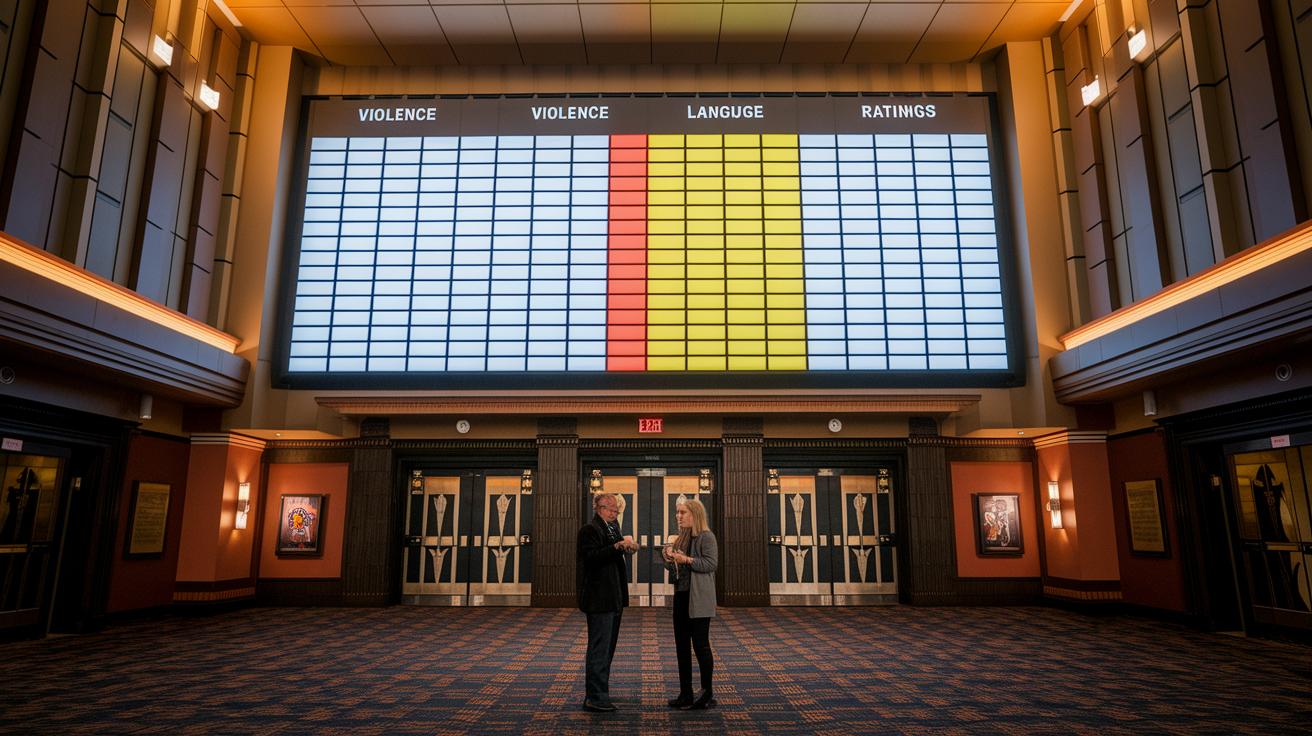
Film ratings look at key parts of a movie to decide which viewers might enjoy it. They check how violent a film is by seeing how strong the action is, how often fights or intense scenes occur, and if graphic details like blood are shown. For instance, a movie with long, detailed fight scenes might get a higher warning than one with quick, off-screen action.
The rating system also examines the language used. It counts how many harsh words appear and considers if they are used during dramatic moments or in a light, humorous way. A film that uses strong language often may receive a more serious rating compared to one where such words are rare.
Sexual content is another key factor. Films may range from showing gentle hints of romance to scenes that are very explicit. A movie with just a few soft moments might get a lighter rating than a film that has detailed sexual scenes.
Drug use gets reviewed too. The system looks at how substance use is shown, whether it appears as a minor detail or is portrayed as dangerous behavior. A film that focuses a lot on substance abuse might be rated more strictly.
| Content Category | What Reviewers Look For |
|---|---|
| Violence | How strong the action is, how often it happens, and if there is graphic gore. |
| Language | The number of harsh words used and how they fit into the story. |
| Sexual Content | From subtle hints of romance to very explicit scenes. |
| Drug Use | Whether substance use is shown as a minor detail or dangerous behavior. |
Global Film Ratings Systems Explained: International Comparisons
Film ratings across the world serve the same main goal: they help audiences decide if a movie is right for them. In the United Kingdom, the British Board of Film Classification uses ratings like U, PG, 12A, 15, and 18. These labels match local values and what the public expects. For instance, a 12A rating means parents might want to watch the film first before letting younger teens see it.
In Australia, the Australian Classification Board has its own set of ratings: G, PG, M, MA15+, and R18+. This system sets clear age guidelines and sticks to them, even charging fees for the process. It shows a tight balance between letting filmmakers be creative and keeping the public safe by enforcing strict rules.
In India, the Central Board of Film Certification uses ratings such as U, U/A, A, and S. Filmmakers often have to cut or change parts of their work to meet these standards. Each country’s system shows how local rules and cultures shape film ratings, with some places, like the United States, relying more on voluntary rules and others, like India, requiring edits to meet the guidelines.
Controversies in Film Ratings Systems Explained

Filmmakers and critics often disagree about the PG-13 rating. Some say it lets movies show just enough edgy content to catch attention without hitting R, which can boost a film’s appeal. This debate makes us wonder if PG-13 supports bold storytelling or if it’s mainly a marketing trick.
NC-17 also suffers from a bad rep. Movies marked NC-17 are often seen as box office bombs because they feature very explicit content, even when the work is artistically done. This negative view sometimes forces studios to cut scenes or challenge ratings in order to attract a wider audience. The shift from X-rated to “XXX” shows how these rules change over time.
Ratings play a big role in shaping what viewers expect. They guide our choices and help build buzz around films. This dual role in creative decisions and marketing keeps the debate alive among industry insiders and fans alike. For more on how ratings affect film marketing, check out the Film Verdict Deep Dive.
Using Film Ratings Systems for Safe Viewing
Parents can do more than just check movie ratings. They can set filters on streaming apps to block films that aren’t right for their child's age. Many services let you create a separate profile with restrictions. For example, you can limit the available movies to those rated PG or lower. One parent said, "I set up filters and never worry about unexpected content."
You can also boost safe viewing by using apps that watch for risky content. Some of these tools even alert you in real time about new age-appropriate releases. A recent case study found that homes with these systems saw fewer surprises during family movie nights.
Practical steps include:
| Step | Action |
|---|---|
| 1 | Review your streaming service’s parental control settings. |
| 2 | Create separate profiles and secure them with a PIN. |
| 3 | Check out third-party apps for smart content monitoring. |
For a quick fix, open your app’s control panel and choose a filter that suits your child’s age.
Final Words
In the action, you've seen how a film ratings system explained can guide your movie choices. We walked through the basics of content classification and explored its history. We also unpacked MPAA ratings, compared global approaches, and tackled common debates. Each piece helps you decide on safe, age-appropriate picks while saving time and money. These insights offer clear, practical steps to tailor viewing to your tastes and needs. Enjoy your films and make every ticket count!
FAQ
Q: What are all movie ratings and their meanings?
A: All movie ratings and meanings classify films by content guidelines, showing which films are safe for all ages and which include material like violence, strong language, or adult themes. Familiar ratings are G, PG, PG-13, R, and NC-17.
Q: What is the Motion Picture Association film rating system?
A: The Motion Picture Association film rating system sets guidelines based on content like violence and language. It offers a voluntary, advisory scale helping viewers choose films suited for specific age groups.
Q: What is the TV rating system?
A: The TV rating system assigns shows labels based on content and viewer suitability. It guides audiences on which programming is appropriate for children and which includes mature themes that might need parental guidance.
Q: What does rated PG-13 mean?
A: Rated PG-13 means films may include moderate violence, sexual content, or strong language, suggesting parental guidance. It implies the content is more suited for viewers aged 13 and above.
Q: What are the reasons for movie ratings?
A: The reasons for movie ratings include assessing violence, sexual content, language, and drug use. Ratings help viewers decide if a film’s content aligns with their personal preferences and age restrictions.
Q: What age is recommended for PG-rated movies?
A: PG ratings generally suggest parental guidance for children, indicating that while the film is accessible to younger viewers, some material might need discussion with adults before viewing.
Q: What is the movie star rating system?
A: The movie star rating system summarizes a film’s quality using stars. It offers a quick visual reference, helping viewers gauge overall critical reception without delving into detailed reviews.
Q: What are movie age ratings?
A: Movie age ratings signal if a film is suitable for all audiences or if it contains mature content for older viewers. They guide parents and viewers in selecting films that match age appropriateness.
Q: What are the five film ratings?
A: The five film ratings in the MPAA system are G, PG, PG-13, R, and NC-17. They range from family-friendly content to films with explicit material meant for adult audiences.
Q: Can I take my 12-year-old to see a 15-rated film at the cinema?
A: Taking a 12-year-old to a 15-rated film depends on local guidelines. Films rated for 15-year-olds typically indicate mature themes that may not be appropriate for a younger viewer.
Q: Is an MA rating worse than an R rating?
A: An MA rating is best understood by knowing that it often indicates stronger adult content. MA films are meant strictly for mature audiences compared to R films, which may allow younger viewers with an adult.
Q: What are Z-rated movies?
A: Z-rated movies refer to films with extremely explicit content intended only for adult audiences. Although rarely used today, they signal material that goes beyond typical NC-17 content warnings.