

Ever thought a simple experiment could bend time? In Primer, what sounds like a wild puzzle actually follows a clear plan. Two engineer friends, Aaron and Abe, stumble on a discovery that mixes time loops with funny twists. We break down how one odd moment turns a regular day into a tangled time challenge. Get ready to see how a quirky fungus test spins a basic idea into a captivating mystery.
Primer Plot Explained: Simplified Narrative Synopsis
Primer centers on two engineer friends, Aaron and Abe, who work on side projects in a cluttered garage. One day, a routine fungus test speeds up in a bizarre way, turning a five-day process into several years. This strange event makes them wonder if something mysterious is happening. Believing there’s more to it, they build two odd boxes that send people back to the start time. What started as a simple experiment quickly turns into a tricky puzzle that demands careful timing and close watching.
As the story moves on, Aaron and Abe create strict rules to manage the wild time loops. They soon learn that each box has a set activation period and a precise 15-minute timer that helps prevent them from meeting themselves. In just four days, they use these rules to pull off smart stock moves and even intervene dramatically at a birthday party, ending with a risky reset. Each experiment makes the timeline messier as copies of themselves add to the chaos.
At the end, things get even more unclear. We see Aaron-Prime building a massive, room-sized machine that hints at bigger consequences. This open ending leaves plenty of questions about the tangled timelines and the true impact of their time experiments, inviting viewers to watch again and explore all the possibilities.
Primer Timeline Breakdown: Nonlinear Structure and Graphic Mapping

This guide gives you a simple visual map of Primer's tricky time loops. It starts with a surprising fungus experiment that sets off the time travel ideas and moves on to the build of a bigger machine. Each row in the timeline shows a key moment where things go awry, quick fixes are needed, or events intersect in unexpected ways. For instance, Abe’s early return via Box 1 mixes past and present, and Aaron-2 stepping in at a birthday party stops the chaos from growing. This chart helps break down the film’s layered story into clear points. For more on how modern films play with time, you can check out additional insights at https://reviewstrends.com?p=886.
| Timeline Point | Description | Characters Involved |
|---|---|---|
| Fungus test anomaly | A simple fungus experiment goes wrong, sparking the idea of time travel. | Aaron, Abe |
| First time loop activation | The time travel box kicks in, creating a loop back to the beginning. | Aaron, Abe |
| Hotel six-hour jump | Abe shows up six hours early, proving the machine can shift time. | Abe |
| Birthday party intervention | Aaron-2 steps in during a party to stop a looming threat and change the timeline. | Aaron-2 |
| Failsafe execution | Abe uses a reset trick by drugging his past self to avoid more problems. | Abe |
| Construction of larger machine | Aaron-Prime builds a new, room-sized machine, leaving the future wide open. | Aaron-Prime |
These points show just how Primer mixes its story in a non-chronological way.
Primer Time Travel Mechanics Explained in the Plot
In Primer, the time machine works by following clear, strict rules. When it starts up, it sends things back to the very moment it was turned on. A one-minute burst kicks off about 1,300 cycles. This means the box holds over 2,600 minutes of time. To work properly, even the users must keep to a tight schedule. For example, someone must enter the box right after it starts at 12:01 PM and exit exactly at 12:00 PM, with help from an oxygen tank along the way. Abe even uses binoculars to prove that a future version of him shows up in the box, verifying the setup. A built-in 15-minute timer makes sure that everyone exits on time, which forces all actions inside the box to match the time span exactly when the machine was activated.
| Key Mechanics |
|---|
| Activation window and loop count |
| Required in-box duration matching the activation span |
| “Smart object” human demonstration with an oxygen tank |
| Role of the 15-minute timer in exit timing |
| Accumulated in-machine time effect |
These technical rules give the film a rich complexity that challenges viewers to follow each precise step in the puzzle of time.
Primer Character Motivation Study: Abe and Aaron in Plot Explanation
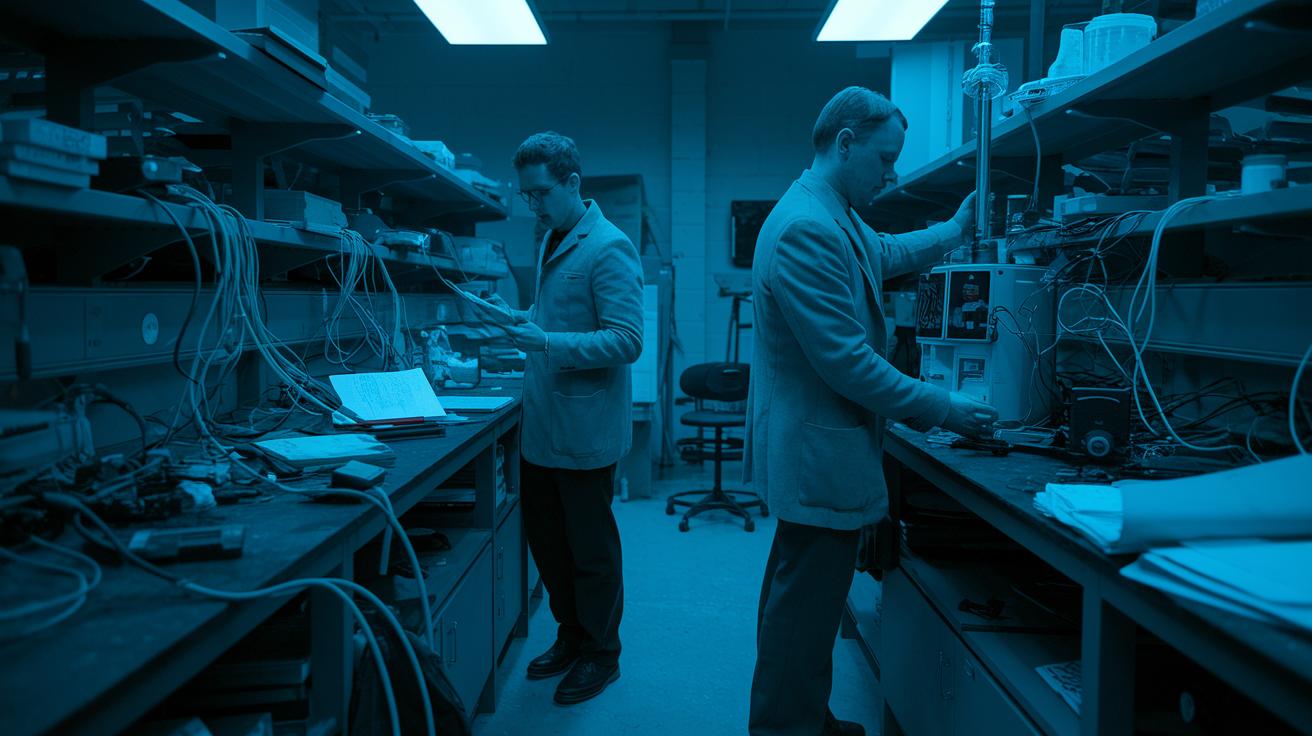
Abe makes every move with extreme care. He builds backup plans to undo bad outcomes when time loops get out of hand. Sometimes his caution leads him to take bold steps, like drugging his past self to stop further chaos. His method shows a clear worry about managing the risks of time travel.
Aaron, on the other hand, is driven by ambition. He secretly sets up his own safety net and eventually builds a larger machine to extend his control over the time loops. While Philip and Robert offer small contributions during the experiments, investor Thomas Granger adds money into the mix, a risky move that ends in a coma.
Key points:
- Abe shows careful planning and built-in safeguards.
- Aaron works with secret ambitions and competitive strategies.
- Philip and Robert play minor roles in the experimental work.
- Granger’s financial involvement leads to dangerous consequences.
Primer Plot Explanation: Paradoxes and Inconsistencies Investigation
In Primer, time travel creates a mind-bending puzzle. We see as many as three versions of Aaron and two of Abe, which means cause and effect become hard to follow. Every change affects the whole timeline, making viewers juggle different versions of the same person.
The film ups the stakes with risky fixes. Abe even drugs his past self to try to stop unwanted events, and an early exit by Granger lands him in a coma. Physical signs like bleeding ears show just how much the time jumps hurt them. These moments highlight the dangerous side of tampering with time and remind us that every experiment has a real cost.
In the end, when Abe-2 and Aaron-3 join forces, a bit of order returns. Their teamwork hints that when the different versions come together, they can balance out the chaos. This collaboration offers a small hope that even the wildest time loops can find some harmony.
Primer Ending Interpretation: Open Conclusion and Theory Discussion

In the final moments of Primer, the filmmakers choose an open ending that leaves many questions behind. Aaron-Prime is seen working on a larger, room-sized time box while Aaron-2 leaves puzzling voicemails. The film’s editing uses sharp cuts and a broken sequence (learn more about film editing and how cuts shape storytelling here) to create an uneasy feeling. This vague ending makes you wonder about the lasting effects of messing with time, blurring the lines between order and chaos.
Fans have come up with several ideas to explain what happens next. Key theories include:
- Aaron’s plan to keep the time loops going forever.
- A warning about the dangers of unchecked scientific power.
- The possibility that new cycles of paradox are inevitable.
Each viewing might reveal new hints, which is why the film attracts repeated attention. Its open conclusion has helped Primer become a cult favorite, inviting endless discussion and fresh interpretations every time it’s watched.
Final Words
In the action, we break down the film's layers, starting with early experiments and escalating time loops. We traced the boxes, shifts in time, and challenges the characters face in a clear primer movie plot explanation.
The blog unpacks technical details, character motivations, and unpredictable endings. It offers a simple yet thoughtful look at the film's inner workings.
The review leaves you with a fresh perspective and plenty of ideas to think about for your next movie night.
FAQ
Q: What is Primer about?
The movie Primer follows two engineers who accidentally develop a time-travel box in their garage. Their experiments spiral into complex loops and paradoxes, creating a story that challenges how time alters cause and effect.
Q: What information does Primer have on IMDb?
The IMDb listing for Primer offers production details, cast and crew information, viewer ratings, and reviews, helping audiences appreciate its cult status and low-budget ingenuity.
Q: What is the cast of Primer and who is Shane Carruth?
The film features mostly unknown actors alongside its creators. Shane Carruth, the mastermind behind Primer, wrote, directed, and produced the film, adding a personal and unique touch to its narrative.
Q: What does the ending of Primer mean?
The ending, with Aaron-Prime building a larger device, invites viewers to consider endless time loops and unforeseen consequences. It leaves the film open to interpretation without a clear final answer.
Q: Is Primer difficult to understand?
Primer can be challenging due to its non-linear structure and complex scientific ideas. Its layered narrative calls for careful watching and even rewatching to fully grasp the details.
Q: What is the paradox in Primer?
The paradox in Primer emerges from multiple duplicate characters operating within time loops. Their interactions create causal conflicts and duplicate events, making the rules of time-travel appear ambiguous.
Q: What were they trying to build in Primer?
The characters aimed to create a time-travel device that loops subjects back to the start time. Ultimately, their work hints at building a larger machine to enhance and extend their time manipulation.