

Ever wonder what those stars and numbers on a movie scorecard really mean? They might seem confusing at first, but they offer a quick way to decide if a film is your style. In this guide, we break down the hidden clues behind star ratings, numeric scores, and simple icons. Once you learn how to read these summaries, you'll feel confident picking your next movie. This fresh approach makes film reviews clear and useful for everyone.
Interpreting film verdict scorecards: Clear, Fresh Insights
Film verdict scorecards take detailed reviews and turn them into short, clear insights. They mix a teaser synopsis (a quick look at the plot without giving away twists), a clear analysis of elements like direction, acting, and camera work, and a simple rating. Reviewers even add easy, relatable examples. For example, one might say, "Before she was world-famous, Marie Curie carried test tubes of radioactive material in her pockets, unaware of the risks ahead." This style helps both busy viewers and movie fans get the idea fast.
Scorecards also use familiar rating methods to show quality at a glance. Whether it is star ratings, numeric scores from 0 to 10, or thumbs up/down icons, these marks act as simple shortcuts for a film’s overall worth. They promise fairness and honesty while turning deep critiques into clear, measurable standards.
In practice, scorecards serve as handy guides for what to watch next. They work like a map, pointing out films that might be hits or even cult favorites. By looking at the brief synopsis, sharp analysis, thoughtful interpretation, and clear rating, you can quickly spot movies that match your taste and make your choice faster and more confident.
Breaking Down Numerical and Star Ratings on Film Verdict Scorecards

Knowing how different rating scales work is key because it gives you a quick way to judge a film's quality. Critics use many scoring methods, so understanding what each system means helps you trust their quick summaries.
Here are some common rating types:
- 1 to 5 stars
- Scores from 0 to 10
- Percentage grades from 0 to 100
- Thumbs up or thumbs down icons
- Letter grades from A to F
When you compare films using these different scales, think about the story behind each score. A 0 to 10 scale shows small, detailed differences, while a 1 to 5 stars system turns complex opinions into a simple picture. Percentage grades may reflect a wider set of factors, and thumbs up or down offer a quick yes or no. Letter grades come off as more traditional. The key is to look past the numbers and see which parts of the film the reviewer cared about, whether it is the story, direction, or technical work. This understanding helps you pick films that match your taste.
Analyzing Critic Versus Audience Scores in Film Verdict Scorecards
Critics usually rely on trusted sources like awards ballots and jury panels. For example, official Critics' Choice Awards ballots, recorded on January 11 for the 24th Annual event and January 9 for the 23rd, show insights based on careful viewings. Film festival juries also share their opinions by judging movies in a competitive setting.
Audience scores come from things like user polls and social media buzz. Events like Oscar Bowling, held on February 21, 2019 for the 91st Academy Awards and on March 3, 2018 for the 90th, show how public view can shift compared to critics. This feedback captures quick, honest reactions from viewers online.
Putting both sides together gives a fuller picture. Critics focus on technical details and artistic style, while audience scores highlight emotional pull and fun moments. By checking both, you can judge if a film meets your own tastes.
Interpreting Advanced Symbols and Metrics on Film Verdict Scorecards
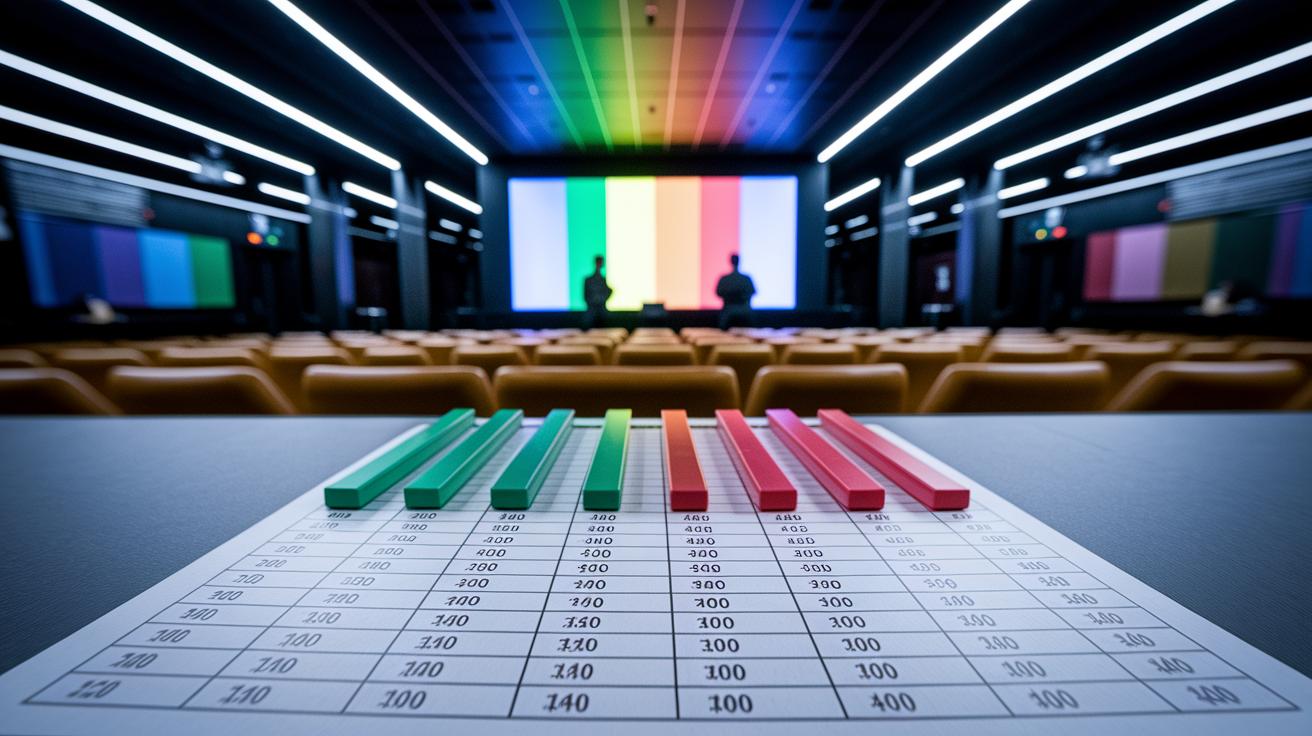
Many film scorecards use simple colors and symbols to show a film's strengths at a glance. A green marker often means high praise, while red warns of issues. These visuals let you quickly see the good parts without reading long reviews.
Some scorecards mix several scores into one overall rating. They use weighted averages, which means they combine marks for story, direction, acting, and technical work into a single number. Often, these charts also break down the scores, so you can see which area stands out or struggles. For example, the TSR Movie Awards posts on February 25 for the 17th event and February 26 for the 15th event show how different elements add up to the final score.
You might also see extra icons next to some scores. These symbols hint at awards like best director or best visual effects. Spotting them can help you quickly decide if the film might be a hit for your tastes.
Aggregating Scorecard Data for Holistic Verdict Analysis
Combining scorecards from different sources gives you a fuller picture of a film’s performance. By mixing numbers, star ratings, and award summaries, you reduce the chance that one single score skews your view. This approach offers a solid look at what a film might deliver.
A smart method is to break each element down into a common format. First, convert star ratings and letter grades into numbers on a 0 to 10 scale. Then, add in award results – for example, from the 17th Annual TSR Movie Awards on February 25, the 15th Annual TSR Movie Awards on February 26, or critics’ ballots like the 24th Annual Critics’ Choice on January 11. Blending these figures with standard scorecards creates a complete view that takes both critics’ opinions and audience feelings into account. This combined method also helps spot trends in technical, story, and performance areas.
When you check this aggregated data, keep an eye out for unusual scores. Compare trends from different sources and note any big gaps, such as one category scoring much higher than another. These differences can reveal hidden strengths or weak spots that one number alone might miss. Using this approach gives you a reliable overview that guides you to smart viewing choices.
Practical Strategies for Applying Film Verdict Scorecards

First, set your own rules based on what you love. If you lean toward certain genres or enjoy films that mix suspense with humor, mention it in your scorecard. This way, you know which parts, story, style, or technical bits, matter most to you.
Then, decide how much weight to give critic and audience scores. Critics use careful thought and context, while users share quick, real-time reactions. Pick the one that best fits your way of deciding which film to watch.
Finally, check your scorecard against user reviews and even festival awards. This helps you see common trends and balance out one-sided opinions, giving you a well-rounded view for your next movie pick.
Final Words
In the action, we broke down film verdict scorecards step by step. We covered numerical and star ratings, compared critic with audience scores, and explained advanced symbols and metrics. Each section laid out clear ways to mix scores and practical tips for making fast, confident picks.
Understanding these methods makes interpreting film verdict scorecards a handy tool for deciding what to watch next. The film review process becomes more transparent and useful with every helpful insight. Enjoy your next movie night!
FAQ
What does interpreting film verdict scorecards (including MMA) mean?
Interpreting film verdict scorecards means breaking down key elements—like story, direction, and technical craft—to offer a quick, clear metric of a film’s quality, similar to how MMA results summarize a match.
How does a complete beginner analyze a film?
A complete beginner analysis involves looking at the film’s basic elements such as plot, acting, visuals, and sound, using simple steps and clear examples to form an honest opinion.
What is a film analysis example?
A film analysis example examines crucial parts like narrative pacing, visual style, and acting to show how specific choices make a film engaging or weak.
Which movies are good to analyze?
Movies with strong storytelling, creative direction, and memorable performances provide rich details that make them great subjects for thorough film analysis.
What does “learn film analysis in 20 films” mean?
“Learn film analysis in 20 films” suggests studying a range of movies—each offering different techniques and styles—to build a solid, practical understanding of film critique fundamentals.
What film techniques are typically analyzed?
Film techniques analysis covers elements such as camera work, editing, lighting, and sound, which are all used to build mood and support the narrative in a film.
What is the 2.5 rule for movies?
The 2.5 rule for movies is a quick guideline that suggests a film rated above 2.5 (on a 0–5 scale) is generally decent, while anything lower might point to significant shortcomings.
What are the 5 C’s in film?
The 5 C’s in film refer to Cutting, Continuity, Camera work, Composition, and Content; these are key elements that filmmakers use to create visual and narrative impact.
How does one analyze a film score?
Analyzing a film score involves assessing how the music enhances atmosphere, builds tension, and complements the story, focusing on composition, instrumentation, and timing.
What does it mean when a film is 100% on Rotten Tomatoes?
A 100% rating on Rotten Tomatoes means that every critic review collected was positive, indicating unanimous critical approval, though it may not reflect overall viewer opinion.