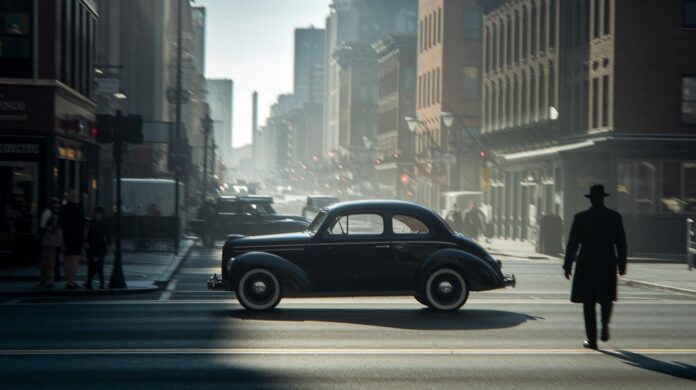

Ever thought about how old film reels can still push progress today? Back then, each movie screening felt like a live event because projectionists carefully wound every reel by hand. Their craft made each film experience unique and memorable. Today, we see that these vintage methods helped shape modern film technology. The journey of retro film reels shows that even old techniques can spark new ideas in how we enjoy movies.
Understanding the Evolution of Retro Film Reels
Film reels became popular back in the late 1800s when early inventors introduced celluloid and simple projection machines. In that time, watching a film was a hands-on experience. Projectionists had to swap reels by hand, showing viewers a blend of craftsmanship and constant innovation.
By the mid-1900s, this era was in full swing. Technical improvements like better sprocket-hole designs and motorized winding made it easier to run films without constant interruptions. Reels, usually around 1,000 feet long, handled everything from silent movies to talkies. Projectionists relied on skill and precision to bring stories to life.
The digital shift started in 1996 with the film Windhorse. This marked a move away from celluloid and the old manual methods. Digital workflows changed how movies were made and shown, but the legacy of retro film reels still reminds us of a time when every projection was a special, hands-on event.
Origins of Celluloid Reels and Early Cinematic Equipment
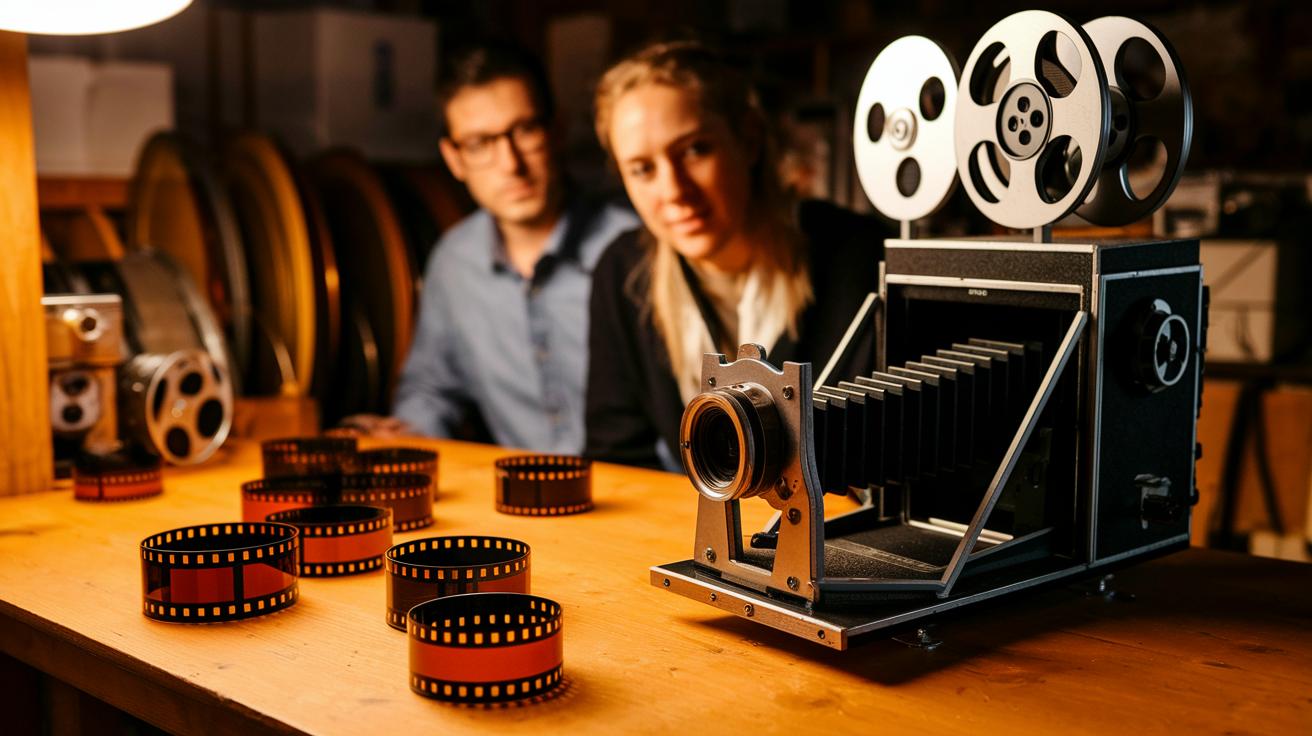
Back in the late 1800s, film reels showed up with the first motion picture cameras. Thomas Edison's 1892 camera got people curious about this new way to capture life, and by 1894 public screenings had audiences amazed by moving images. Early filmmakers and inventors embraced these new formats, using celluloid (a flexible base material) to record their stories. The excitement from those first public exhibits set the stage for film to become a key part of entertainment and led to more advances in movie technology.
These first reels were built using a simple mix of materials. They started with a plastic base coated in a gelatin emulsion that held silver halide crystals. During filming, these crystals darkened when they caught light to form negatives. Projectionists could easily wind and unwind the film by hand during screenings. This clever blend of chemical innovation and basic mechanics paved the way for the reliable film experiences that early audiences enjoyed.
Design, Dimensions, and Weight of Vintage Movie Reels
Vintage movie reels are a real reminder of film's analog past. A standard theatrical reel held 1,000 feet of film, which runs about 11 minutes at 24 frames per second. Each reel weighed around 5 pounds. For a 90-minute movie, filmmakers used nine 1,000-foot reels that together weighed nearly 45 pounds. Some films even used two-reel sets of 2,000 feet, which helped cut down on the number of breaks during projection and saved on shipping costs. These physical details shaped how projectionists managed smooth changes during screenings.
| Length (ft) | Runtime (min at 24 fps) | Weight (lbs) |
|---|---|---|
| 1,000 | 11 | 5 |
| 2,000 (two-reel) | 22 | 10 |
| 9×1,000 (feature set) | ~99 | ~45 |
Projectionists had to handle these reels with great care. They worked to keep transitions smooth and aligned, knowing that even a small slip could disrupt the show. Their skill with heavy, delicate reels shows the ingenuity behind vintage film projection and reminds us how far modern cinema has come.
Key Manufacturing and Operational Innovations in Reel Systems
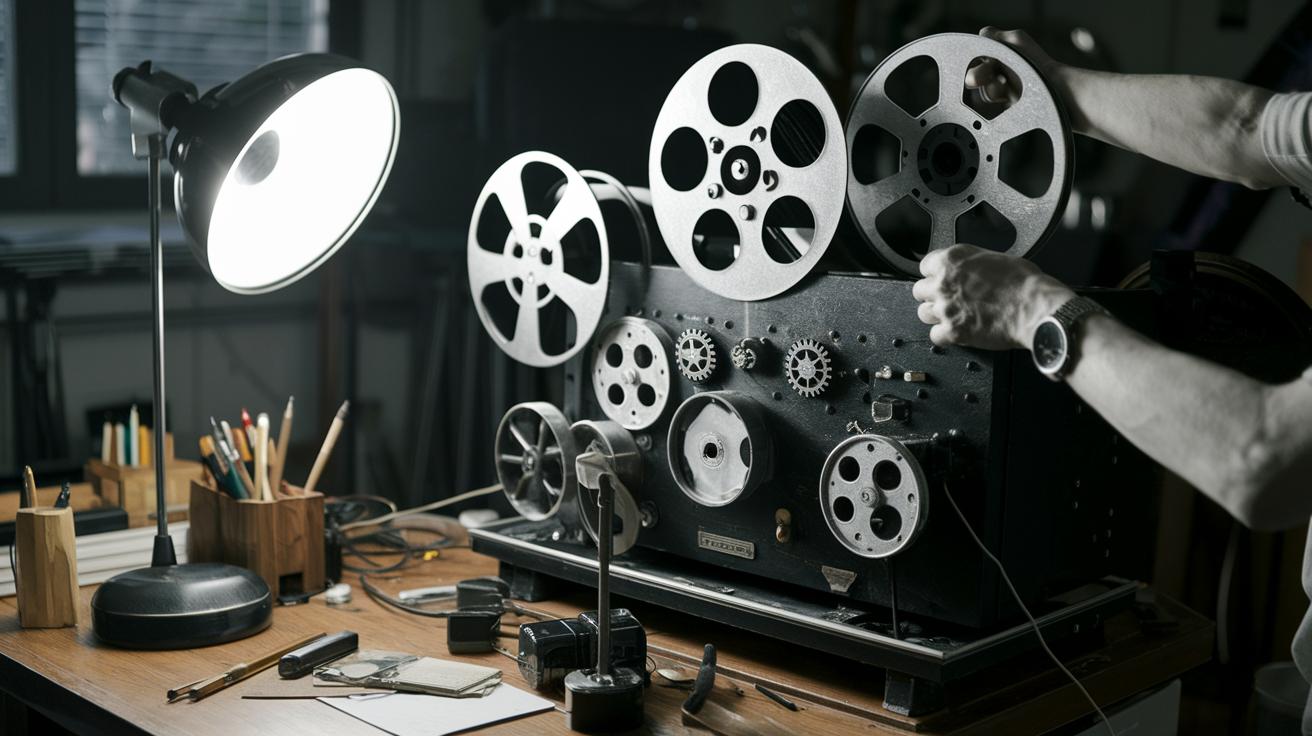
In the early days of film projection, people built and tested their own equipment, trying out new mechanical ideas that changed cinema. Because projectors needed to work reliably, inventors made key improvements that helped movie screenings run smoother and more efficiently. These upgrades cut down on errors during scene changes and made it possible to show films without interruptions. Engineers solved the problems of switching reels by reworking the projection systems, which boosted both image quality and overall reliability.
- Moved from hand-cranked projectors to electric-motor systems
- Standardized sprocket holes and film perforations
- Introduced a two-reel setup for longer, uninterrupted screenings
- Improved silver halide emulsions for sharper, more stable negatives
All these changes transformed film operations. Electric projectors got rid of the uneven speeds of hand-cranked machines, while standardized sprockets helped film move evenly to prevent misalignment. The two-reel system reduced the need for frequent reel swaps, which cut down on mistakes and physical wear. Better silver halide emulsions not only made images clearer but also helped films last longer. Together, these advances paved the way for modern movie-making techniques and marked a crucial era of innovation that still influences digital methods today.
Transition from Analog Reels to Digital Filmmaking Technology
Windhorse (1996) was the first fully digital feature film. It changed the game from old celluloid film to digital screens. With this film, digital cameras and projectors proved they could work just as well as traditional gear. Filmmakers felt both excitement and a bit of nervousness about shifting away from physical reels. Still, it showed that new technology could keep storytelling fresh and engaging. People in the industry saw big upsides like fewer mechanical problems, simpler editing, and media that lasted longer.
By the late 1990s and early 2000s, digital filmmaking took over. Studios and theaters quickly switched from film reels to digital setups. The new process cut costs, streamlined production, and eliminated the need for manual reel changes. Filmmakers embraced these tools and pushed the limits of visual storytelling. This shift not only changed how movies were made but also paved the way for a more creative era in film.
Cultural Impact and Preservation of Retro Film Reels

Old film reels carry a deep sense of history and emotion. They take us back to a time when movies felt tangible. These reels remind us of birthdays, family gatherings, and community events captured on celluloid. Their worn edges and unique textures spark a kind of nostalgia that modern digital files simply can’t recreate. Collectors and historians alike treasure these relics for their personal and cultural stories.
Keeping these film reels safe means checking each one carefully for mold, broken splices, and fading emulsion. Skilled technicians repair them, store them in special climate-controlled places, and often convert them into a digital format for future generations. This careful work honors our analog past and ensures these pieces of history stay alive. For more details on the process, see "exploring film restoration: preserving cinematic history" at https://reviewstrends.com?p=1187.
Final Words
In the action, we explored how film reels shaped early cinema, detailed their design and mechanics, and tracked key breakthroughs that paved the way for digital innovation. We also touched on preservation practices that keep retro reels alive in our cultural memory. This overview shows that understanding the evolution of retro film reels provides valuable insight into both our cinematic past and its digital future. Keep an eye out for the charm of analog innovation, it reminds us why film history still inspires today.
FAQ
What does watching the evolution of retro film reels mean?
The phrase watching the evolution of retro film reels refers to viewing a historical overview that showcases the development of film reel designs and usage, from early celluloid constructions to later analog formats.
What do old movie film reels look like and are they available for sale?
Old movie film reels are classic analog reels that exhibit historic design features. They are sometimes available for collectors or specialty sellers interested in vintage cinema.
When were film reels invented?
Film reels were invented in the late 1800s with the rise of early motion picture technology, paving the way for public screenings of moving images.
Are film reels still used today?
Film reels are rarely used in mainstream theaters now since digital projection has replaced them, although some film festivals and enthusiasts still enjoy analog presentations.
What film reel material is used, and what does 35mm mean?
Film reels are made from celluloid with a gelatin emulsion that creates images when exposed to light. The 35mm format refers to a standard film width that offered excellent image quality for decades.
Who was the first actor to get $1,000,000 for a movie?
Historical sources often credit Marlon Brando as the first actor to secure a million-dollar film deal, marking a milestone in how talent was compensated in Hollywood.
What are the different types of old film reels?
Different types of old film reels include formats like 35mm, 16mm, and larger 70mm versions, each tailored for specific projection setups and quality needs during the analog film era.
How can old film reels be viewed?
Old film reels can be viewed at specialty film theaters, archives, or festivals where projection equipment is maintained to support analog film presentations.
When did film reels stop being used in mainstream projection?
Film reels largely fell out of mainstream use during the late 1990s and early 2000s as digital technology rapidly transformed movie projection and distribution.