

Have you ever wondered how ambition might quietly steer our choices? In Primer, subtle clues lie right in front of you. Simple items like a marker or a clock show how one small lie can quickly turn into a huge mistake. A few key scenes reveal the steep price we pay for pushing our limits too far. This close look uncovers a warning: behind every scientific quest, there's a risk of bending truth and losing our integrity.
Primer Movie Symbolism Analysis Reveals Deeper Meaning
Primer follows two engineers who begin with sheer curiosity but soon become weighed down by their own mistakes. Their journey shifts from bright scientific exploration to desperate attempts at covering up their errors. This change invites the audience to think about how chasing progress can lead to losing a clear sense of right and wrong.
A standout idea in the film is what some call the Pinocchio Theory (the idea that every lie or dishonesty grows and causes more trouble). The movie borrows a memorable line from Bootsy Collins: "If you fake the funk, your nose will grow." This simple warning shows that even small acts of deception can start a chain reaction that erodes personal integrity. Quiet hints in the visuals and dialogue remind us that what starts as a bold experiment can quickly turn into a heavy burden when the cost of ambition takes over.
Scene-by-Scene Symbolism Breakdown in Primer

These key scenes give us clear visual hints about the themes in Primer. They show how everyday objects and small details reveal the dangers of unchecked ambition. Each moment teaches a cause-and-effect lesson and helps you understand the characters' moral struggles.
By watching these scenes, you see everyday moments turn into strong symbols. The film shows an obsession with time, choices, and identity. Simple details like markers and clocks appear as hidden motifs throughout the story.
- Garage Test (Day 1): The bare wiring in the time machine hints at our fragile control of cause and effect.
- Helicopter Debrief: The red and black marker colors point to clear moral choices.
- Airport Scene: The synchronized movements of duplicates mirror the film’s looped sequences.
- Warehouse Finale: Old calendars and taped boxes emphasize a fixation on tracking time.
These scenes may take place in different settings, but they work together like pieces of a puzzle. The careful design of each moment shows the ongoing battle between new ideas and ethics. The simple wiring in the garage reminds us that even groundbreaking ideas can depend on very thin means of control. The bold marker colors and repeat visuals remind us that each choice splits the story into different paths. This powerful symbolism deepens our view of the characters and makes us think about responsibility and the cost of progress.
Temporal Paradox Symbolism and Physics Dilemmas
Primer ties time travel to the wild side effects of innovation gone off course. It shows how even a tiny twist in time can loop back and create unexpected chaos. The characters face split selves, bringing quantum uncertainty (where many versions of a person exist at once) and ethical dilemmas to life. These physics challenges are more than scientific puzzles; they turn the story into a clear warning about the high cost of tampering with time.
| Paradox Type | Scene Example | Symbolic Meaning |
|---|---|---|
| Causal Loop | Garage Test Repetition | Cycle of obsession |
| Self-Duplication | Airport Confrontation | Identity fracture |
| Time Reset | Final Warehouse | Erasure of accountability |
The film uses physics ideas to show that these glitches are more than mere technical hiccups. They mirror the characters' inner conflicts and show how small actions can spiral into huge consequences. By mixing hints of chaos theory with moral questions, Primer invites us to consider how the wonder of time travel comes with a steep price.
Visual Metaphors and Abstract Imagery in Primer
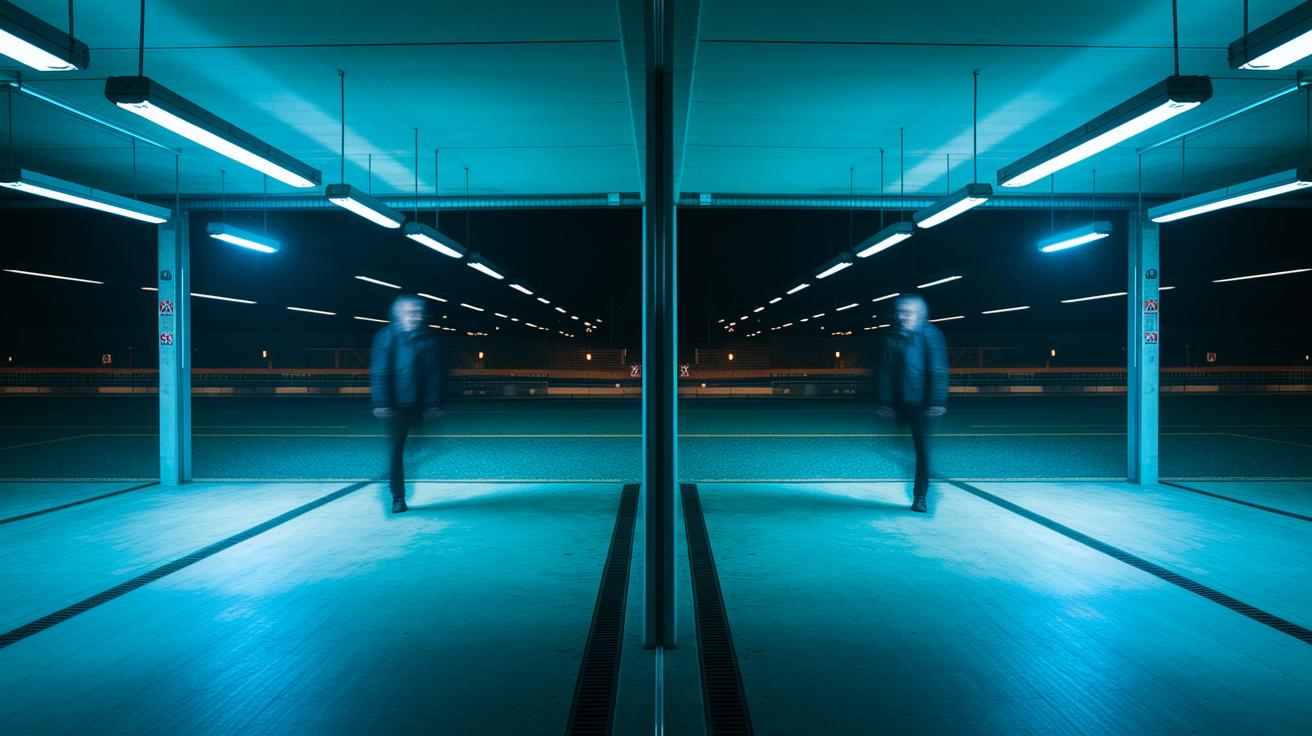
The garage interiors feel cold and clinical, mirroring the characters' disconnect from moral choices. The almost empty space hints that breakthrough ideas come at the cost of warmth and real human connection.
Night scenes in backlit parking lots add a sense of looming uncertainty. Shadows play around, suggesting that hidden truths may resurface when least expected, which underlines the film's warning about taking risky detours from the norm.
Frequent reflections in glass hint at the dual nature of the protagonists. Each mirror image subtly points to an inner struggle between self-interest and the burdens of their actions.
A soft, muted color palette runs through the film, setting a mood of suppressed emotions and confusion. These quiet tones capture a world where ambition cools personal feelings, leaving choices shrouded in doubt.
Nonlinear Storytelling and Recursive Motif Analysis
Primer uses a jumbled timeline that makes you work for the story. Scenes don’t follow a straight line but twist and loop back, much like the characters losing their grip on what’s real. This out-of-order editing forces you to connect the dots, echoing the protagonists’ struggle with their own moral confusion. Handwritten charts and scattered notes add to a visual feel of being trapped and off balance.
The film’s repeated loops also show a loss of control. Each cycle highlights how making the same choices over and over can ramp up ethical dilemmas and blur personal responsibility.
In the end, the unconventional timeline serves as a strong symbol. By skipping a normal sequence, Primer challenges you to see time as a broken, unpredictable force, mirroring the push and pull between fate and free will that keeps the tension alive.
Subtext and Script Deconstruction in Primer
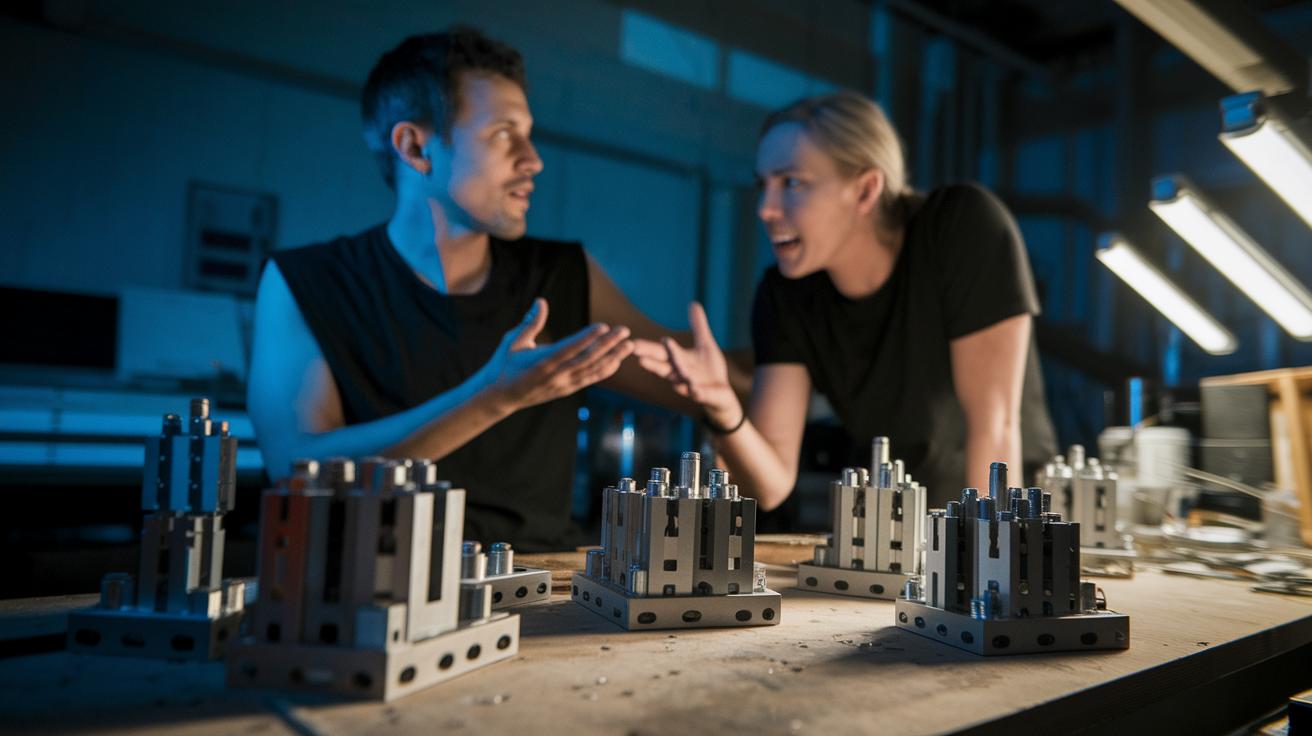
Primer uses simple, measured dialogue that cuts right to the core of each scene. The few, carefully chosen words invite you to read between the lines, giving each moment extra weight and meaning. Every exchange feels like a blank canvas where memory and context fill in the details on their own.
Take the line "We’ve got to build another box." It hints at growing tension and a shift in control, setting the stage for higher stakes in their secret experiment. Other brief remarks, like when someone talks about "finishing" the machine, suggest hidden plans and secret motives that add a layer of collective anxiety.
When a character says, "if someone else had finished building it…", it shows how even small changes can lead to big problems. This subtle line makes you wonder who is really calling the shots and highlights the themes of trust and betrayal woven through every whispered command.
Characters as Symbols: Aaron and Abe’s Ethical Descent
At first, Aaron and Abe come across as curious engineers who are passionate about solving problems. Their looks, with Aaron in a hoodie and Abe sporting a tie, hint at the start of an exciting journey in discovering who they are.
As the story moves forward, both characters begin to show signs of paranoia. What started as a clear love for science slowly turns into a fight for survival, with each man reflecting a hidden fear of losing their moral ground.
Aaron’s hoodie, once a sign of fresh ideas and pure innovation, over time marks his growing isolation and anxiety. At the same time, Abe’s tie, a clear nod to professionalism in the beginning, transforms into a signal of calculated control as he struggles to hold onto his identity. Their changing styles clearly trace the route from innocence to a more corrupted ambition.
In the final shots, the characters appear as isolated versions of themselves, lacking the unity they once shared. These visual cues drive home a deep crisis born of endless innovation. The careful choice of clothes and subtle actions tell a deeper story: every change in their appearance mirrors a fall from hope to a desperate need to protect themselves.
Scholarly Debates and Alternate Symbolic Interpretations
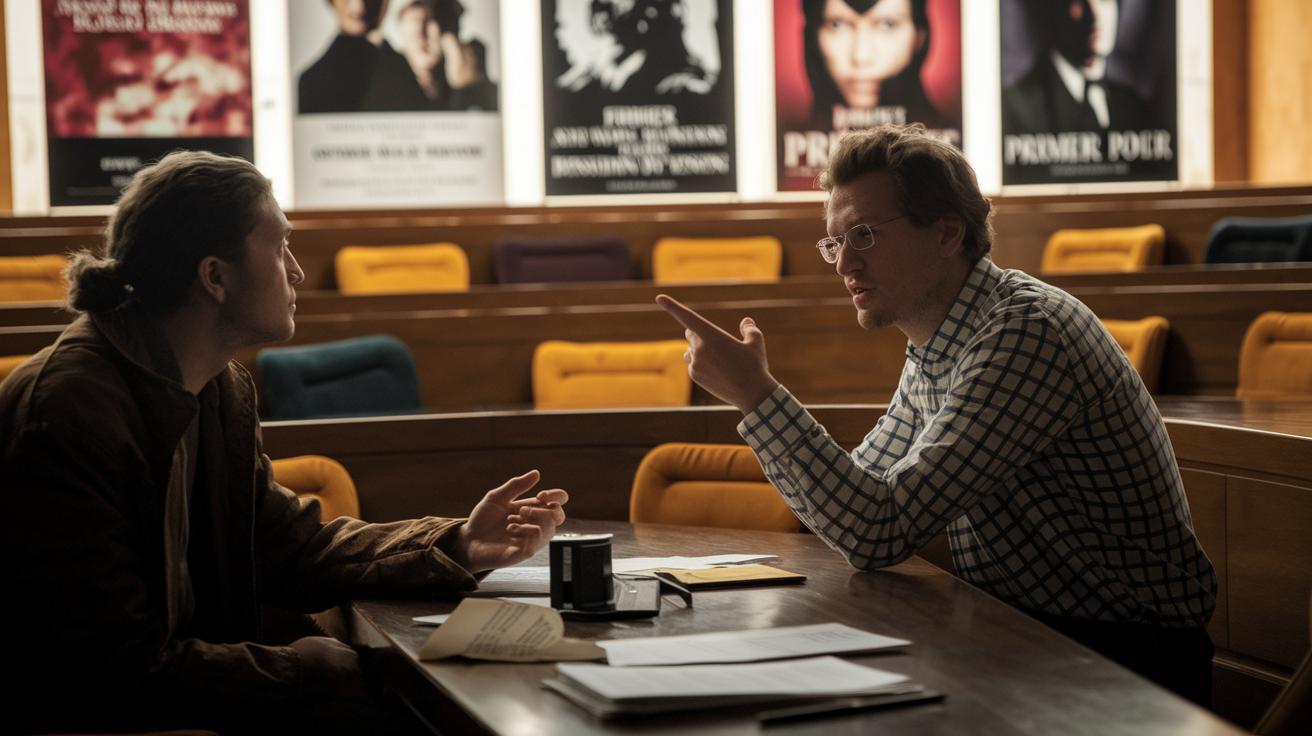
Academic debates help us see films like Primer in new ways. Experts share different ideas that make us think deeper about the movie.
- One group uses the Pinocchio theory to look at deceit. They believe that one lie can lead to more trouble, while others say it shows a deep sense of existential worry.
- Some scholars see Primer as a look at masculine pride. They think the characters' strong ambition hints at overconfidence with technology and a clash with old-fashioned ideas.
- Others focus on Second Aaron’s narration. They wonder if his story can be trusted and argue that his words add a hidden layer of meaning.
- A few discussions mix different fields of study. They say the film’s unclear dialogue and gaps in the story push us to question whether our choices are free or already set.
- Lastly, some academics point to the film’s open ending. They argue it allows viewers to decide if the movie supports fate or celebrates personal choice.
These varied views show that Primer rewards thoughtful watching. Taking time to explore these ideas can make your viewing experience richer and more engaging.
Final Words
In the action, we explored how Primer's layers of visuals, narrative loops, and subtle dialogue build a rich primer movie symbolism analysis. The breakdown of key scenes, ethical character shifts, and clever filmmaking techniques shows how symbolism mirrors the film's core themes. Each element emphasizes shifts from curiosity to moral decay while inviting fresh interpretations. This deep look makes even complex concepts feel relatable and engaging. Enjoy the film with a new eye for detail and embrace its creative risks.
FAQ
What do Primer movie symbolism analysis spoilers reveal?
The Primer movie symbolism analysis spoilers reveal key turning moments that showcase the protagonists’ moral shifts and the film’s time-loop chaos without giving away major plot twists.
How is Primer movie symbolism analyzed on Reddit or in essays?
The analysis seen on Reddit and in essays breaks down the film’s layered themes, such as scientific ambition and identity loss, offering varied and engaging interpretations that spark lively discussion.
How is Primer explained and what should viewers know?
Primer is explained as a complex narrative about time travel and its unintended consequences, urging viewers to piece together visual clues and sparse dialogue to uncover its deeper messages.
What is the Primer movie flowchart used for?
The Primer movie flowchart is designed to map out overlapping timelines and causal loops, helping viewers untangle the film’s intricate structure and understand its hidden narrative patterns.
What are the main themes in Primer?
The main themes in Primer include deception, scientific ambition, identity crisis, and moral ambiguity; these elements combine to form a rich, allegorical commentary on the risks of unchecked innovation.
What is symbolism in film analysis?
Symbolism in film analysis involves decoding visual cues and narrative elements to reveal deeper meanings, such as character evolution and ethical dilemmas, hidden beneath the surface story.
What is the paradox in Primer?
The paradox in Primer centers on its time travel mechanics, where overlapping causes and effects produce duplicate identities and unforeseen, looping consequences that challenge traditional logic.
What were the characters trying to build in Primer?
The characters in Primer were trying to build a time machine, a project that symbolizes their thirst for innovation while also highlighting the potential moral hazards of altering time.
Who is in the cast of Primer film, and are notable actors like Daniel Radcliffe involved?
The cast of Primer primarily centers on director Shane Carruth in multiple roles, supported by a small, understated ensemble. Notable actors like Daniel Radcliffe, Mary Elizabeth Winstead, Paul Dano, and Timothy Eulich are not part of this indie production.